
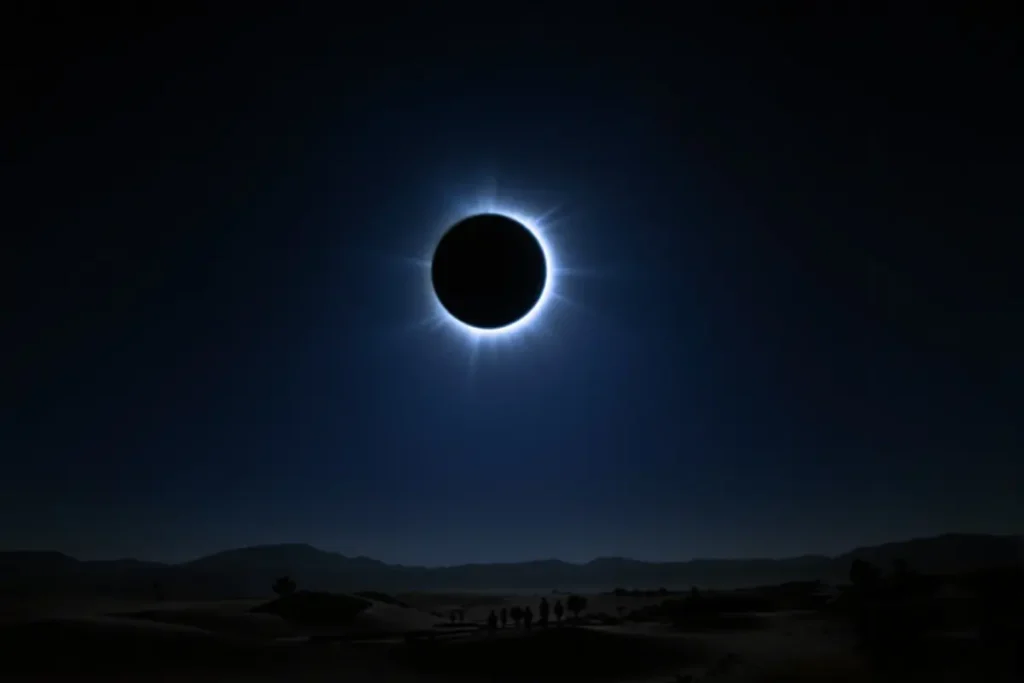
Mark your calendars—the longest solar eclipse of the century is on its way, and it’s set to bring a moment of cosmic drama unlike anything you’ve seen. For a span of nearly six minutes, the Sun will disappear behind the Moon, casting a shadow over Earth and turning day briefly into night.
What makes this eclipse so special?
This isn’t just any solar eclipse. It’s expected to be the longest total eclipse of the 21st century. On August 2, 2027, parts of the Earth will witness a staggering 6 minutes and 23 seconds of total darkness. That’s nearly double the length of most total solar eclipses.
The reason it’s so long? The Moon will be at just the right distance from Earth—close enough in its orbit to appear slightly larger than the Sun. This perfect alignment will allow the Moon to fully block sunlight for longer than usual.
Where will you be able to see it?
Not everyone will get the full show. The path of totality—the narrow track where the eclipse will be total—will sweep across several countries:
- Spain (southern coast) – including Gibraltar and parts of Andalusia
- North Africa – especially Morocco, Algeria, Tunisia, and Egypt
- Saudi Arabia – particularly the western coast
- Red Sea and parts of Sudan and Yemen
If you’re in or near these areas, you’ll witness the full eclipse. Others outside the path of totality will still see a partial eclipse—where the Moon only blocks part of the Sun.
The best places to watch from
According to astronomers, some of the most breathtaking viewing spots include:
- Luxor, Egypt – where the eclipse hits at the perfect angle, offering nearly the full 6+ minutes
- Meknès, Morocco – for great visibility and favorable weather
- Asir region, Saudi Arabia – high altitudes mean clear skies and an amazing view
Keep in mind, clear skies are essential. Even a few clouds can ruin the moment, so choose your viewing location wisely.
When to look up
The eclipse will begin mid-afternoon local time, depending on your location along the path. Here’s what to expect:
- Partial eclipse start: Around 11:00 AM UTC
- Total eclipse begins: Around 12:06 PM UTC
- Maximum totality: Peaks at around 12:17 PM UTC
- Eclipse ends: Around 1:45 PM UTC
Exact timing can vary by location, so be sure to check local forecasts and eclipse calculators closer to the event.
How to watch safely
It’s tempting to look directly at the Sun during an eclipse, but doing so without protection can truly damage your eyes. To safely enjoy this rare spectacle, always use:
- Certified eclipse glasses that meet ISO 12312-2 international safety standards
- Solar viewing filters for telescopes and binoculars
- Pinhole projectors if you want a safe, DIY viewing method
Never use regular sunglasses or makeshift filters—they don’t block the intense rays.
Why eclipses captivate us
There’s something deeply humbling about watching the sky dim in the middle of the day. Birds go quiet. Shadows turn strange. Temperatures drop slightly. For just a few minutes, everything feels unfamiliar—and magical.
Total solar eclipses have fascinated humans for thousands of years. Ancient cultures saw them as omens or messages from the gods. Today, we understand the science, but the sense of awe remains just as strong.
Don’t miss it—this is a once-in-a-lifetime show
If you’re thinking, “Can’t I just catch the next one?”—think again. Although solar eclipses happen about every 18 months somewhere on Earth, eclipses of this duration are rare. The next one this long won’t happen until 2114.
So if you’re able, make plans. Travel to the path of totality. Get your glasses ready. And prepare to experience 6 minutes of otherworldly beauty.