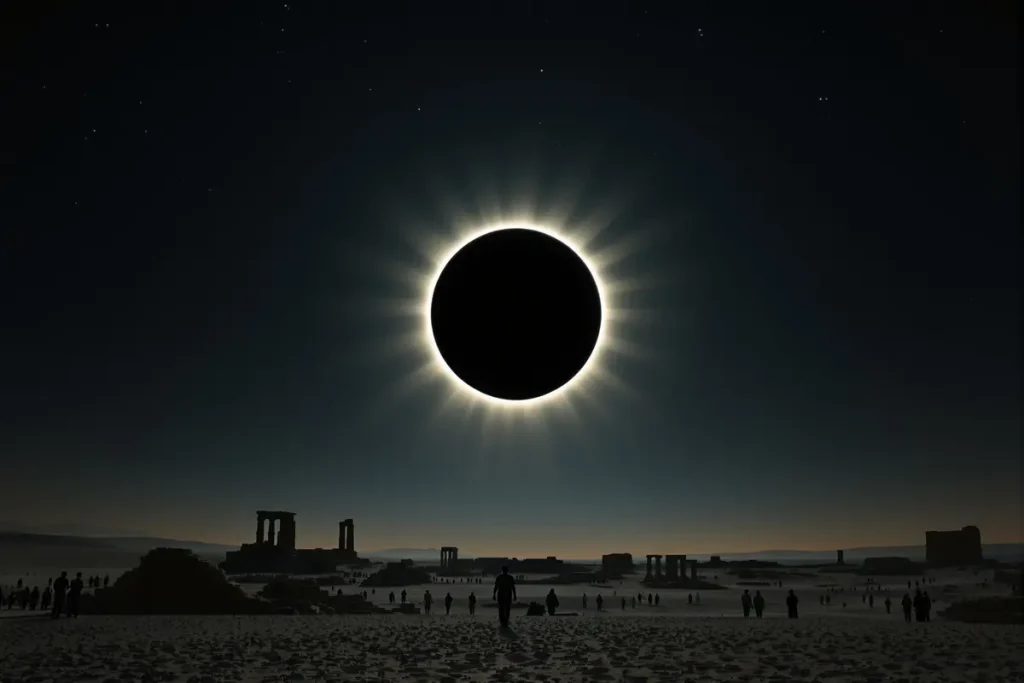
The sky will go dark at noon. It sounds like the start of a movie, but on August 2, 2027, it’ll be reality. The **longest total solar eclipse of the 21st century** will cast a wide shadow over parts of Earth, turning daytime into an eerie twilight for over six minutes. It’s more than just a rare event — it’s a powerful experience that could take your breath away, stir deep emotions, and send myths soaring across the internet.
What makes this eclipse so special?
This isn’t your average total eclipse. Most only last a few fleeting minutes. But on that day in August, the Moon’s shadow will stretch across a huge area — from the Atlantic Ocean through **North Africa, the Middle East, and into Asia** — and the Sun will disappear for a staggering six minutes and twenty-three seconds.
That’s nearly twice as long as most eclipses. Here’s why:
- The Moon will be slightly closer to Earth, making it appear bigger in the sky.
- The shadow will cross near the equator, where Earth’s surface spins fastest.
- The alignment will be nearly perfect — the kind of cosmic luck that makes this an eclipse for the record books.
That’s not just a neat math coincidence. It’s a recipe for something unforgettable.
Where and when will you see it?
If you’re along the eclipse path, you’re in for a front-row seat. The best views will fall along a narrow band known as the “path of totality.” People in this path will see the full eclipse, while others nearby will catch a partial show.
The eclipse will begin in the Atlantic, then sweep across:
- North Africa — including Egypt and Morocco
- The Middle East — passing over parts of Saudi Arabia
- South Asia — including southern Pakistan and India
That means places like Luxor, Egypt could be among the best places to witness this rare midday darkness.
What will it feel like when the sky goes dark at noon?
It starts slowly — almost too slow to notice. About an hour before totality, the sun will look like it’s missing a bite. Then, the world quietly starts to change.
- The light grows cold and flat, as if someone applied a gray photo filter.
- Shadows turn sharp, doubling and stretching strangely.
- Birds sing their evening calls, insects go quiet, and the air cools noticeably.
Then, in a matter of seconds, it happens. The Sun vanishes, leaving a black hole in the sky surrounded by ghostly, white fire — the solar corona. People often gasp, cry, or simply fall silent. It’s not just about light and dark — it feels ancient, primal, surreal.
Is it dangerous?
The sky might look unsettling, but the real threats come from us — how we react, not the eclipse itself. Here are a few honest concerns:
- Eye damage: Looking straight at the Sun, even during partial phases, can cause permanent harm if your eyes aren’t protected.
- Public confusion: People may panic, especially if they don’t understand what’s happening.
- Technology hiccups: Sudden loss of light could confuse sensors, affect cameras on drones, or momentarily reduce solar power.
- Animals may act strangely: Birds roost, pets may get nervous — it’s brief and harmless, but curious to witness.
All of this is manageable. The eclipse is safe if you’re prepared and sensible.
How to get ready
This isn’t just an event to observe — it’s one to live. Here’s how to experience it fully and safely:
- Protect your eyes: Get certified solar viewing glasses. Standard sunglasses won’t help.
- Plan your location: Look up the path of totality and choose a spot. Will you travel or stay local?
- Be still during totality: Find a safe, open place. Avoid driving or rushing around. The sky will come to you.
Veteran eclipse watchers recommend this three-step method:
- Use your eclipse glasses during the gradual darkening phase.
- Take them off only during total eclipse — when the Sun is completely covered.
- Put them back on the moment the Sun starts peeking out again.
How to talk about it with others
Don’t keep it to yourself — a shared eclipse is more powerful. A few days beforehand:
- Explain the event to kids in simple terms: “The Sun will go behind the Moon for just a few minutes, like night in the middle of the day.”
- Give neighbors or family a heads-up — especially older adults who may be curious or concerned.
- If you’re a teacher or work in a public space, help spread calm information, not rumors or hype.
The deeper meaning: a shadow that connects us
During those six minutes, light won’t just fade — time might feel like it pauses. In a fast, noisy world, few moments offer that stillness. For some, it’s scientific. For others, spiritual. And for many, it’s simply unforgettable.
You may feel small. You might feel awe or even fear. All are valid. But one truth cuts through it all: the universe doesn’t care about our hashtags or headlines — it moves in its rhythm. And for a few moments on August 2, you get a rare chance to witness that rhythm up close.
Your eclipse checklist
- Mark the date: August 2, 2027
- Get eclipse glasses: Buy them early — they sell out fast
- Choose your spot: Find a safe place along the eclipse path
- Make a plan: Who will you watch it with? What will you tell your kids?
- Stay grounded: Don’t fall for wild internet myths or panic rumors
Because when the sky goes dark at noon, the real story isn’t in the shadows. It’s in how we watch, how we feel, and how we remember it afterward.