
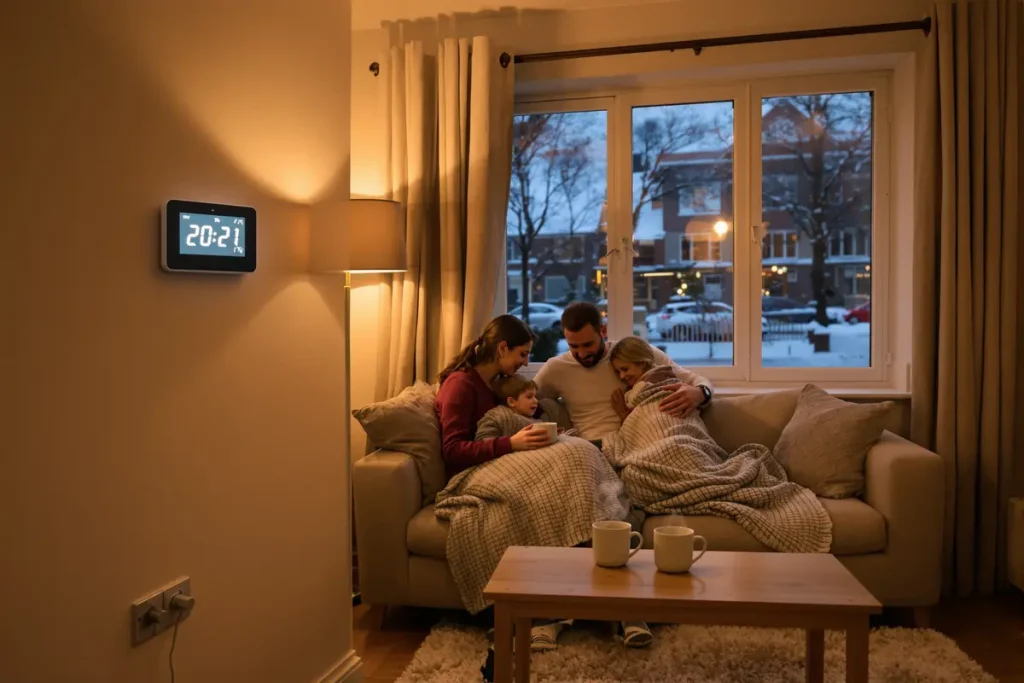
That chill settling in your bones? It’s not just in your head. If you’ve been gritting your teeth through winter at 19 °C, hoping to save money or the planet, here’s some news: experts now say it might not be enough. New research is gently pushing aside the 19 °C “magic number” we were told was ideal for years. The updated advice? 20–21 °C could be the real sweet spot, especially in the rooms where life actually happens.
Why 19 °C is no longer the gold standard
For a long time, setting the thermostat to 19 °C was more than a personal decision—it was a kind of badge of honor. You were doing the “right thing.” Saving energy. Being responsible. But as reality bites, researchers are realizing that 19 °C doesn’t feel the same for everyone.
In poorly insulated homes, 19 °C on the screen might feel more like 17 °C on your skin. Cold walls, draughts, and floor tiles absorb heat, making you feel chilly even when the thermostat says you shouldn’t. And for people with health issues, young kids or elderly family members, 19 °C may simply be too cold.
Data from across the UK, France and Germany shows a worrying trend: more respiratory problems, fatigue, joint pain. Not because people ignored guidelines, but because the one-size-fits-all number just didn’t work in real homes.
The new sweet spot: 20–21 °C in main living areas
So what’s the smarter approach now? Experts recommend aiming for 20–21 °C in the rooms you use most: your living room, your home office, or bedrooms for babies or older adults. Cooler areas like corridors or storage rooms can sit at around 17–18 °C.
This idea is called “zonal heating”. But honestly, it’s just common sense. You don’t need to heat the whole house like it’s a hotel. Focus warmth where you relax, eat, or work—places where comfort actually matters.
- Main living area: 20–21 °C
- Bedrooms (healthy adults): 17–19 °C
- Corridors/unused rooms: 16–18 °C
- Bathroom: Warm briefly, only when needed
Heating smarter doesn’t mean spending more
Worried this will make your energy bill explode? Here’s some comforting math: raising your living room temperature from 19 °C to 20.5 °C might cost just a few extra euros or pounds per week—if you lower temps elsewhere. Keep bedrooms cooler at night or shave a couple of degrees off unused guest rooms and storage areas. The balance usually cancels the extra cost.
And it’s not just about the thermostat. Small actions add up:
- Use thermostatic radiator valves to control heat room by room
- Set timed schedules—heat only when really needed
- Insulate where possible to keep warmth in and cold out
- Add rugs, curtains, blankets—they help retain warmth
A new way to think about comfort
This winter, comfort isn’t a guilt trip. It’s a balance. As one expert put it: the right temperature is the one that keeps you healthy and functional without blowing your budget.
That might mean giving yourself permission to enjoy a short burst of heat before guests arrive. Or keeping your child’s room a bit warmer when they’re under the weather. Small, thoughtful changes—not strict numbers—make the difference.
Instead of aiming for a universal rule, think in terms of ranges:
- Living spaces: 20–21 °C
- Other areas: 17–18 °C unless someone vulnerable is spending time there
How to create your own comfort zone
Ready to try this new approach? Start with these simple steps:
- Pick a core zone—usually your living room—and prioritize comfort there
- Relocate the thermostat if needed. A hallway doesn’t reflect your real comfort
- Set temperatures by time of day and activity (e.g., warmer in the evening)
- Warm your body, not just the air: thick socks, layers, soft blankets
This isn’t just about saving money or energy—it’s about feeling safe, relaxed and well in your home. Your comfort matters. And chasing a rigid 19 °C rule is no longer the way to get there.
Finding your real winter temperature
The end of the 19 °C era doesn’t mean cranking up the heat without care. It means paying attention—both to your body and your home. Temperature is not just a number, it’s a lived experience. What feels fine in one house might feel freezing in another.
So experiment a little. Test how you feel at 20 °C versus 21 °C. Watch for signs like condensation or cold feet. And most of all, trust your comfort. You’re not wasteful for wanting to feel warm.
Because at the end of the day, home should be a place where you feel cared for—not punished by the thermostat.
Quick recap: smart heating in 5 steps
- 20–21 °C in your main living space feels more comfortable for most people
- Let other rooms stay at 17–18 °C, unless someone vulnerable uses them
- Use timers and zoning instead of all-day heating
- Think in layers and fabrics—they matter more than you think
- Adjust to your real needs—not outdated advice
Winter doesn’t have to feel like a test. With a few simple adjustments, it can feel more like a season of comfort, warmth, and balance.