
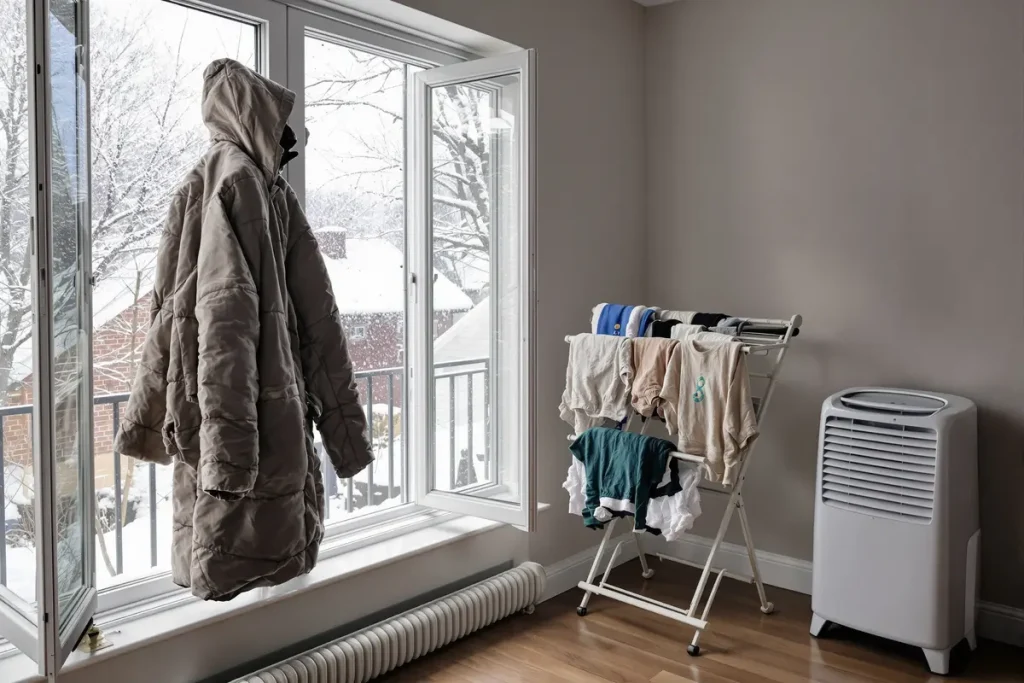
It feels so simple: open the windows to freshen the air. But in the middle of winter, that instinct could quietly backfire. What seems like a healthy habit might be the very reason your house feels damp, your windows fog up, and—worse—mold starts to grow. Let’s dive into the winter airing mistake that many people unwittingly make.
Why long winter airing can make things worse
The idea behind airing out your home is clear: get rid of stale, moist air and bring in fresh air. But if you leave your windows open for too long in cold weather, you might invite a different problem.
When you air out a home in winter for too long, the cold from outside doesn’t just cool the air—it seeps into your walls, floors, and furniture. These surfaces lose temperature and become the perfect spots for moisture to settle and condense. That’s when mold grows silently behind wardrobes and along ceilings.
Even if the air feels drier at first, the surfaces in your home hold onto that cold. And once you close the windows and start cooking, breathing, or showering, the moisture in the air meets those cold spots and turns into water droplets—raising humidity again.
What’s happening behind the scenes?
Here’s the quick science: cold winter air is dry in absolute moisture, but once inside a warm house, it can suddenly hold more water. That’s great—at first. You get a quick reduction in indoor humidity.
But if you leave the windows open too long, the house structure itself cools. Then any new moisture produced indoors lands on those cold walls, reaching the dew point faster and becoming condensation. That’s how a well-meant airing ends up making your home more humid.
Short and smart ventilation is the answer
Instead of one long airing session, aim for short, intense air swaps of 5 to 10 minutes. Open windows wide on opposite sides of the home to let air rush through. This quick draft replaces indoor air without letting walls cool down.
- Duration: 5–10 minutes max
- Open wide, not on tilt—create a strong cross-breeze
- Do it after moisture events: cooking, showering, drying laundry
This approach sends indoor moisture outside quickly, keeping your comfort and your heating bill in check. Plus, keeping your home warmer inside helps prevent surfaces from becoming moisture magnets.
Focus on moisture hotspots
You don’t need to ventilate your entire home the same way. Some rooms need extra care:
- Kitchen: Open a window or run the extractor fan right after boiling or frying.
- Bathroom: Keep the fan on during showers and for 10 minutes afterward. Open the window briefly if there is one.
- Laundry corner: If drying clothes indoors, schedule extra short ventilation rounds.
Keeping furniture a few centimetres from exterior walls can also help air circulate and prevent moisture buildup.
Common habits that fuel humidity
Sometimes, it’s not what you do—but how long you do it. Here are some eye-openers:
- Leaving a window tilted open all day might feel smart, but it cools the house without really swapping air.
- Drying laundry in your living room but forgetting to air afterward. That moisture goes somewhere—often, into your walls.
- Skipping showers with doors closed or forgetting to use extraction fans.
Consistent, small actions work far better than occasional big efforts. Think of it like brushing your teeth: it only works if done regularly and the right way.
Quick signs you might have a humidity problem
Not sure if your home’s humidity is out of balance? Look out for these signs:
- Foggy windows in the morning
- Musty smells, especially in corners
- Dark spots behind furniture or along ceiling edges
- Your dehumidifier fills up too quickly
If anything sounds familiar, it’s time to review your winter airing habits—and how moisture builds up in your space.
You don’t have to live in a cold house
It’s tempting to crack a window for hours to “clear the air.” But you can stay warm and avoid mold by airing less, but with intention. Use targeted, short routines that match your lifestyle and weather patterns.
Some families even set little rules like:
- No drying laundry in bedrooms
- Always run bathroom fans during showers
- Do a 10-minute air swap after cooking
These aren’t strict rules—they’re smart habits. Once you start noticing how air moves, the fog on your windows becomes a clue, not a mystery. That chilly smell in one corner? A hint that a tweak in ventilation could fix it.
The surprising truth: less is more
The biggest winter mistake is thinking that more fresh air means better air. But keeping windows open too long cools down your living space, encourages condensation, and opens the door to mold.
So here’s your new winter airing script: short, sharp, focused. Then close up and enjoy the warmth. Your home will stay drier, smell fresher, and feel more comfortable too.