Hardwood floors can lose their glow long before they wear out. From pet claws to tracked-in dust, your beautiful wood might look dull and lifeless. But don’t rush for vinegar or wax — those old tricks may be doing more harm than good. There’s a safer, smarter way to bring the shine back. And all it takes is one easy trick you’ve probably never tried.
Why Vinegar and Wax Can Make Things Worse
For years, vinegar was the go-to for DIY floor cleaning. It’s cheap, it’s natural — how could it be bad? But modern hardwood floors usually come with a tough factory finish, like polyurethane or aluminum oxide. These coatings don’t like acid.
Even diluted, vinegar can slowly wear down the finish. Over time, your shiny surface can turn dull and patchy. It doesn’t happen overnight. But if you keep using vinegar, the damage adds up.
Wax, on the other hand, offers high shine but comes with its own problems. It creates a sticky layer that gathers dirt and becomes uneven in high-traffic spots. Worse, if you ever want to refinish, that wax has to be completely stripped — which isn’t cheap or easy.
The Better Way: A Gentle, pH-Neutral Shine Boost
The new method many flooring pros use is simple, gentle, and does wonders on dull wood. Here’s the trick:
- Start with a pH-neutral hardwood cleaner — no harsh chemicals, just a safe clean.
- Add a small amount of water-based, residue-free polish made for sealed wood floors.
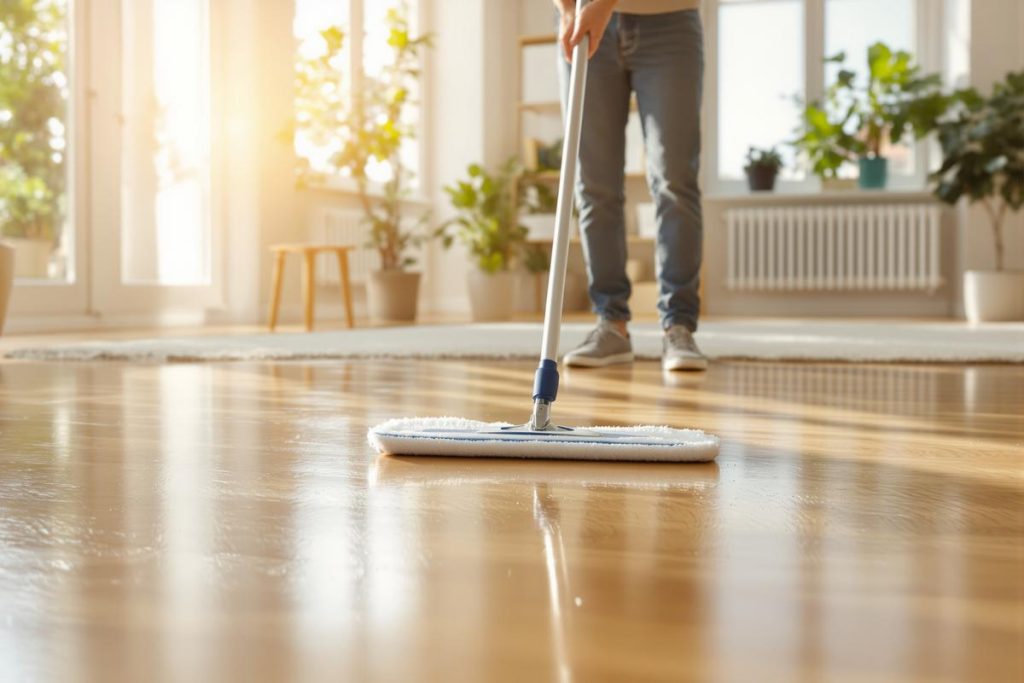
- Use a microfiber mop to apply everything in thin, even layers.
This approach doesn’t soak the floor or cake it in coating. Instead, it adds a light-reflecting layer that freshens up the surface — without damaging long-term health.
Step-by-Step: Make Your Floors Shine in One Afternoon
Here’s exactly how to revive your floors using this easy method:
- Vacuum thoroughly, using a hard-floor setting to avoid scratches.
- Dust with a dry microfiber pad to catch any fine dirt left behind.
- Clean the floor with a lightly dampened mop and your pH-neutral cleaner.
- Let the floor dry completely. Any moisture can ruin the final step.
- Mix the polish with water as instructed on the label — less is more.
- Apply in thin, even strokes with a clean microfiber pad, moving with the wood grain.
- Wait at least an hour before walking on the floor so it sets properly.
The result? A smooth, natural shine that brings warmth back to your room — without residue, streaks, or sticky build-up.
Why This Trick Works So Well
Newer floors come sealed and pre-finished in the factory. These finishes need care, not harsh scrubbing. That’s where pH-neutral cleaners shine. They lift dirt without damaging the topcoat.
Pairing these cleaners with water-based polish creates a clean “refresh” layer. This layer doesn’t soak into the wood. It simply enhances the light reflections from the surface, which makes your floor look brand new.
Avoid These 3 Common Mistakes
Your floor’s shine won’t disappear all at once. Sometimes it fades because of habits you don’t even think twice about.
Using Too Much Water
Soaking the floor with water might seem like a fast-clean trick, but it’s risky. Over time, water can sneak between the boards and cause swelling or finish damage. Always use a lightly damp mop — never soak your wood.
Mixing Products Without Knowing
Vinegar one month, oil soap the next, and then a polish… sounds familiar? Mixing product types builds up grimy layers that trap dirt and dull the look. Before switching products, test a small area of the floor. If the pad sticks or leaves residue, call a pro for a deep clean first.
How Often Should You Do This?
The right schedule depends on your lifestyle, but here’s a simple guide:
- Dust or vacuum: several times a week for busy areas.
- Damp clean: every 1–2 weeks with a neutral solution.
- Polish refresh: every 3–6 months in high-traffic rooms, and once a year elsewhere.
Aim for that soft “barely there” glow. If your floors still reflect light evenly, it may be better to skip a polish cycle. Too much shine can look fake.
Pay Attention to Your Floor’s Signals
Shine, or the lack of it, tells a story. If your floors look dull near windows, it could be sunlight damage. If the sheen fades near doors, you may need better mats to catch dust at the entrance. Look closely, and your floor will show you what it needs.
Remember, many hardwood floors were made from trees that grew slowly over decades. Caring for them gently — not aggressively — helps protect not just their surface, but their history too.
One Tiny Change, Big Results
Forget vinegar. Skip the wax. You don’t need a complicated system or tough chemicals to restore shine. Just grab a pH-neutral cleaner, a matching water-based polish, and your microfiber mop. This one smart trick gives your floors a fresh, natural glow — and helps them stay beautiful for years to come.