Back in 2008, it almost looked absurd—gleaming new metro stations standing alone in empty fields, surrounded by dirt roads and silence. Critics laughed. Foreign journalists called them “ghost stations.” Fast forward to 2025, and those very stations are now at the heart of bustling neighborhoods, research parks, and tech corridors.
The mystery of China’s ‘ghost stations’
When China ramped up metro construction ahead of the 2008 Olympics, many lines ended nowhere—literally. Platforms were placed deep in the suburbs or fringes of cities like Beijing and Chengdu. Some stations operated without passengers. Others were built but not opened at all.
Online, they were dubbed “metros to nowhere” and held up as signs of overbuilding. But these decisions weren’t mistakes. They were bold bets on where cities would grow. And in hindsight, many of them were remarkably accurate.
Why build in the middle of nowhere?
China wasn’t building stations for fun. It was using a long-term strategy most countries shy away from: build the transport first, then let development follow.
Planning documents from the 1990s and early 2000s already mapped out where housing, universities, and industries would go. Metro lines were drawn to match these future plans—even if the area was just farmland back then.
This approach flipped the usual timeline. In much of the world, transit is reactive. Cities wait until traffic gets bad and then build trains. China tried the reverse: lay the rails first, to guide where people and businesses settle.
Benefits of building before the city
There were solid reasons behind this:
- Lower costs: Building early is cheaper than waiting for prices to rise.
- Open land: Rural plots are easier to acquire before residents move in.
- Faster growth: Housing can rise quickly once metro access is in place.
- Economic leverage: Planned stations raise nearby land values, helping cities fund further expansion.
By accepting a 5-to-10-year wait for full ridership, local governments made a calculated gamble. One that’s now paying off in many areas.
What those places look like today
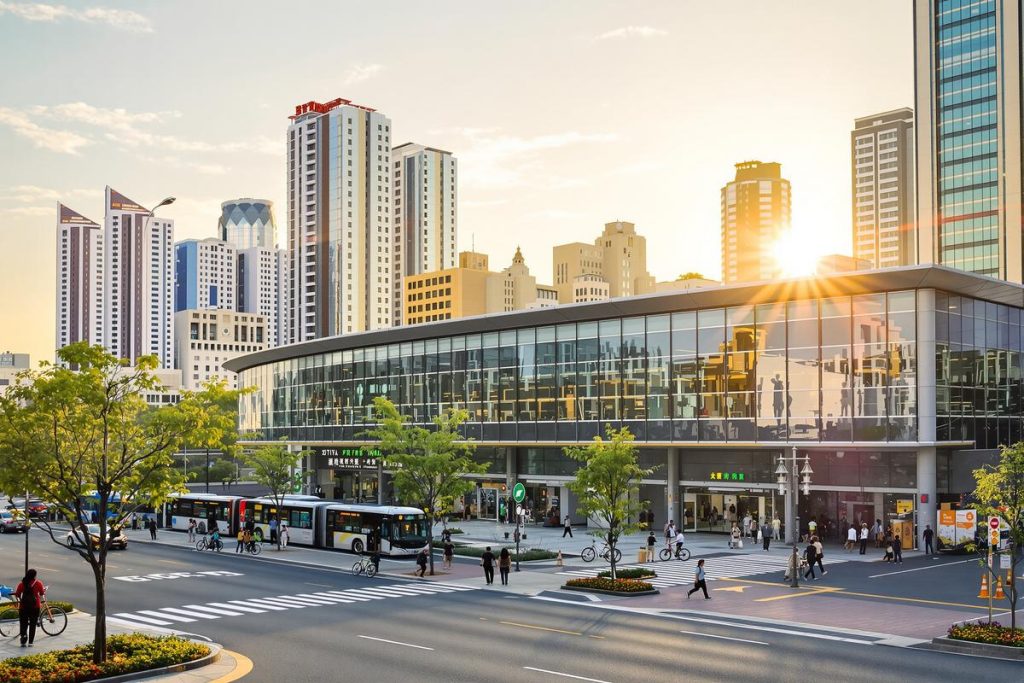
Visit those once-abandoned platforms today and the difference is startling. Dirt roads have turned into shopping avenues. Cabbage fields became apartment complexes, their windows glowing well into the night.
Each station became a seed for a different kind of growth:
- Housing hubs: Developers built massive suburbs around once-empty stops, creating mini cities with schools, clinics, and supermarkets.
- Innovation zones: Provinces like Sichuan and Hubei used metro-linked land for research parks and tech campuses.
- University clusters: Educational institutions popped up around pre-accessed areas, attracting students and staff alike.
The human side: early struggles and long rewards
This transformation wasn’t instant. Residents who moved in early often faced years of dust, constant construction, and missing infrastructure. For them, the metro was a lifeline—the only finished part of an unfinished city.
And not every station succeeded. A few stay underused due to misjudged planning or cuts in government funding. Some cities faced debt pressure after betting too hard on land sales to fund rails.
China’s urban model vs. Western skepticism
In many Western cities, an underused train line is called a “white elephant”—a permanent mistake. But in China’s case, the data shows otherwise. A platform serving 500 people in 2010 might serve 50,000 in 2025, purely thanks to how the city grew around it.
This kind of planning takes political courage. While Western democracies often operate on 4- or 5-year cycles, China’s model gave cities the freedom to think two decades ahead, even if it looked odd—embarrassing even—at the start.
Lessons and limits for the rest of the world
Not every country can copy China. The scale of construction and top-down decision-making are hard to match. But there are still lessons:
- Pre-plan transit with development: Connect housing, jobs, and rail from the start.
- Preserve space early: Lock in station sites before roads and parking lots fill the gaps.
- Show the long-term math: Use clear data to explain how ridership will grow.
- Accept delay: A station may take years to feel useful—but that doesn’t mean it’s wasteful.
However, planners must get their assumptions right. A misplaced station can stay quiet for decades. And if housing prices soar, the people meant to benefit from the metro might get priced out.
From ghost stations to climate solutions
Early transit investment can help the planet—if people use it. Metro systems have high carbon footprints during construction due to concrete and steel. But if they replace car trips for decades, the environmental trade-off turns positive.
Daily riders adapt too. Once residents rely on public transport, they’re more likely to organize their lives around it—accepting smaller homes, longer trips, and lower emissions along the way.
What comes next: building for future demand
China’s ghost stations now serve as case studies for a deeper question: Should cities build infrastructure for today, or for tomorrow’s needs?
Urban planners are now using simulation models to test that. These tools show how opening a line 10 years early can actually change where families settle, how far people commute, and even how cities grow their economies.
In other words, what once seemed foolish can turn into foresight—if the planning aligns with real, long-term needs.
So next time you see a new station rising in the middle of nowhere, maybe don’t laugh. It could be the heart of a city not yet born.