
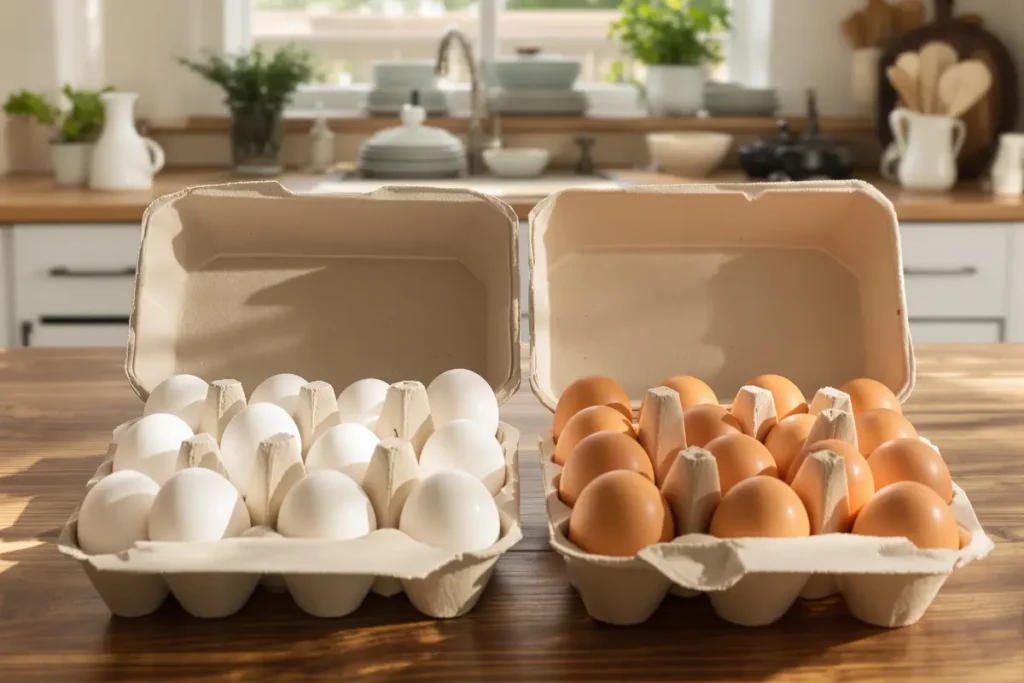
You might be checking the egg shelf, comparing cartons like usual—and think brown eggs are the better choice. Natural. Healthier. Maybe even tastier. But what if that little belief, passed down through generations, was completely wrong?
The real reason eggs are white or brown
Let’s start with a surprising truth: the color of an eggshell comes down to a hen’s breed. That’s it. Nothing more.
Hens with white feathers and white earlobes usually lay white eggs. Hens with brown or red feathers and darker earlobes lay brown ones. It’s like hair color—just genetics.
This has nothing to do with nutrition, quality, or how natural the egg is. Yet so many of us believe brown eggs are somehow better. Why?
The myth of the “healthier” brown egg
For decades, brown eggs have carried an image of being “healthier” or more “authentic.” And white eggs? Often seen as cheap, factory-farm food. But that’s just marketing—and old habits.
Studies show white and brown eggs have nearly identical nutrition profiles. They both offer similar amounts of:
- Protein
- Healthy fats
- Vitamins like B12 and D
- Important minerals like selenium and iron
Any slight differences depend on the individual hen’s diet and health, not on the eggshell’s color.
Why are brown eggs more expensive?
That’s not because they’re better—it’s simple economics. Hens that lay brown eggs tend to be bigger birds that eat more food. More feed means higher production costs. That adds up at the checkout.
Then, there’s the marketing. We’re shown “rustic” images of straw baskets and old barns filled with brown eggs. Our brains link brown to “farm fresh” and white to “mass production”.
But in reality? Fresh, high-quality eggs can come in either color—and from any type of farm.
So how should you choose your eggs?
Forget the color. If you really want to make better choices, focus on what matters more:
- Farming method: Look for labels like free-range, organic, or pasture-raised. These tell you more about the hen’s life than the eggshell ever could.
- Freshness: Always check the best-before date. At home, use the water test: fresh eggs sink, older ones float.
- Origin: Choose local producers when possible. Whether their eggs are white or brown, they’re likely fresher and the supply chain is shorter.
- Printed codes: In many countries, each egg has a small printed code that tells you about the farm and farming method.
What about taste?
This surprises a lot of people: taste doesn’t depend on shell color. When freshness and hen feed are the same, blind taste tests show hardly any difference between white and brown eggs.
Some folks say brown eggs make richer omelets or that white eggs are best for baking. But again, it all comes down to how fresh they are and what the hen ate.
One myth busted, a better habit begins
Once you let go of the belief that brown eggs are “better,” you start seeing things differently. You may feel less guilty buying white eggs—or more careful about looking at farming labels.
This small shift can lead to better choices and more confidence. It turns your quick supermarket stop into a thoughtful moment. You’re no longer choosing for show. You’re choosing with purpose.
Quick tips for choosing better eggs
- Check the best-before date before buying
- Do the water test at home to check egg age
- Look for farming method on the box—not the shell color
- Buy local when you can, regardless of egg color
- Ignore the price-color trap; cost differences are about feed, not quality
Final thoughts: it’s just a shell
We often inherit beliefs from family, ads, or simple repetition. “Brown is better” is one of those myths that stuck. But now you know the truth: shell color has no real nutritional, taste, or moral meaning.
The next time you reach for a carton, think about what matters to you. Animal welfare? Supporting small farms? Price? Freshness?
Pick the eggs that fit those values. Not the ones that just look right to your habits.