When winter hits hard, many drivers fall into a routine that feels both practical and comforting. You start the car, let it idle in the cold, and head back inside where it’s warm. But according to mechanics across the country, that habit could be slowly damaging your engine — and you might not even notice until it’s too late.
Why long idling on cold mornings is a hidden engine killer
Sitting still while your car idles might seem like the smart choice. After all, it melts the frost, warms the cabin, and gets your commute started comfortably. But under the hood, something else is happening — something you don’t see from your kitchen window.
On freezing mornings, your engine oil thickens like cold syrup. It can’t flow freely to protect moving parts, especially at the top of the engine. And when the engine idles for a long time, it stays in this state longer — partly lubricated, partially protected.
Compounding the issue, modern engines inject extra fuel when cold. This enriches the mix to avoid stalling, but some of that raw fuel washes down the cylinder walls. That means less protection, more wear, and faster oil breakdown.
The long-term damage idling causes
Mechanics know the signs: burned oil, excess carbon buildup, rough starts. Many cars come into the shop in late winter or early spring with complaints that they “feel off” — sluggish, louder, less efficient.
These aren’t freak events. They’re the result of months of repeated long idling. Little by little, it adds up:
- Thicker oil = slower lubrication of engine parts
- Excess fuel = dilution of oil film on cylinders and pistons
- Idling = slower warm-up, prolonging engine stress
- Hidden wear forms well before you see problems
The better cold-start routine: quick, simple, engine-friendly
The good news? You don’t need special tools, just better habits. Here’s what most modern mechanics now recommend for freezing mornings:
- Start the car and let it idle for just 30 to 60 seconds
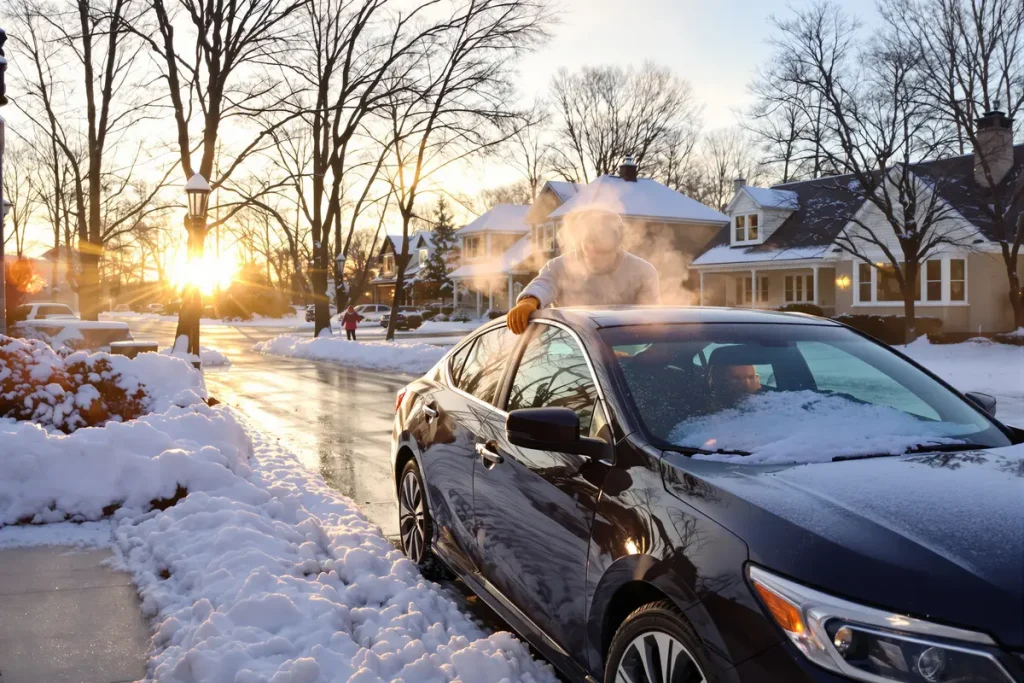
- Scrape your windows manually; don’t rely only on the defroster
- Drive gently at low RPM during the first 5–10 minutes
- Avoid hard acceleration or high speeds until fully warmed up
- Use winter-grade oil as instructed in your car’s manual
This may sound counterintuitive, but driving — even just cruising slowly through your neighborhood — warms your engine faster than idling. It helps circulate oil effectively, lean out the fuel mix, and get all systems up to operating temperature efficiently.
What you gain by changing this one habit
If you’ve been idling for years, don’t panic. You haven’t destroyed your engine, but you may have added silent stress to it. Fortunately, it’s never too late to change.
Switching to a “short idle + gentle drive” tactic brings some big benefits:
- Reduced engine wear in those critical first minutes
- Better fuel economy over the entire winter season
- Smoother engine performance as deposits and stress are minimized
- Fewer repairs related to oil consumption and carbon buildup
And while an extra icy blast on your face may not be fun the first week, your engine will thank you by spring — with better mileage, smoother starts, and a longer lifespan.
What mechanics really want drivers to know
Mechanics see this every winter. Cars come in tired, struggling, even damaged — not because of bad drivers, but because misinformation keeps old rituals alive.
As mechanic Lena from Toronto puts it: “If you want your engine to last, stop treating your driveway like a parking lot and start treating those first ten minutes like a warm-up lap.”
That mental shift — from comfort to care — helps protect something you’ve already invested in: your car’s long-term health.
Final thought: set your car up for success this winter
Your car’s toughest moment isn’t racing down the highway — it’s those raw, freezing first minutes in the morning. If you want fewer breakdowns and smoother rides by spring, you don’t need fancy gadgets or monthly tune-ups. You just need a small change of habit.
Start smart. Drive early. Take it slow. And let your engine thank you — quietly — with years of reliable performance.