
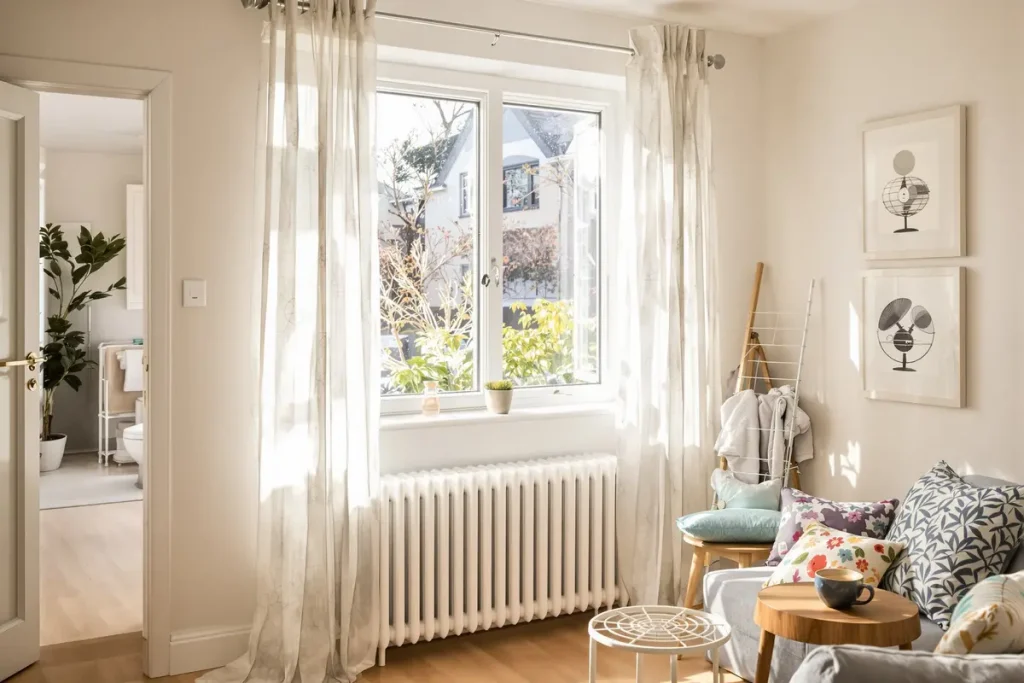
Has your home ever smelled a little off in winter, even after cleaning? That stale scent—that mix of used air and dampness—can sneak back in just hours after airing out. It’s frustrating, but it’s not your fault. Most people make the same ventilation mistake, and fixing it could make your whole home feel fresher and lighter.
Why winter air feels stuffy—even in spotless homes
You walk into your home, everything looks tidy, but the air feels thick. Not dirty, just… flat. Like a room that hasn’t had a breath of fresh air in days. That’s the signature smell of winter staleness.
Here’s why it happens:
- Windows stay sealed to keep the heat in
- Radiators constantly hum to fight outdoor chill
- We dry laundry inside and take long, hot showers
- Cooking adds steam and particles into already saturated air
All of this releases moisture and tiny invisible bits into the air. In warmer seasons, open windows let that out. In winter? We trap it all inside, day after day.
Added insulation makes things worse (in a surprising way)
Modern homes are sealed tightly to hold heat. That’s great for saving energy—but not for clearing out smells. Instead of escaping, odors stick around. They settle into your curtains, cushions, and even your walls. Moisture in the air helps them cling.
And all those scented cleaners and candles? They usually just mask the problem instead of solving it. Over time, your clean house ends up smelling like a mix of laundry steam, dinner from last night, and faint perfume. Not dirty—just dull.
The simple ventilation mistake most people make
When the air starts feeling stuffy, you might crack a window for a few minutes. But as soon as it gets chilly, you close it again and hope for the best.
This on-and-off approach doesn’t help much.
The real fix? Gentle, consistent ventilation that lets fresh air in without turning your home into an ice cave.
How to freshen your home without freezing
Here’s what actually works:
- Run fans longer: Use your bathroom and kitchen fans for 15–20 minutes after cooking or showering
- Try short, strong air swaps: Open two windows across your home just a crack for 5–10 minutes
- Use trickle vents: Those little slits at the top of windows aren’t decorative—open them fully in winter
- Dry laundry in one room with a slightly open window, not all over the house
- Keep humidity between 40–60% to stop mustiness from settling in
These don’t tank your energy bill. In fact, reducing moisture can even make you feel warmer—and stop you from bumping the thermostat.
Your home is like a pair of lungs
Think about it: you don’t take one big breath in the morning and hold it all day. You breathe steadily. Your home needs that same rhythm—a quiet inhale and exhale throughout the day.
Doing quick ventilation three to four times a week can change your space completely. Visitors might not notice why it feels so good in your home—they’ll just feel lighter, more comfortable. And you’ll notice it too.
Make it part of your routine
Ventilation isn’t just for spring. Build it into your winter habits:
- Open a window while wiping counters
- Air out after vacuuming
- Let the fan run while you’re brushing your teeth
It’s those tiny, regular steps that prevent air from getting stale in the first place.
FAQs about winter air and ventilation
Why does my house only smell stale in winter?
In winter, we seal up the house, create more moisture, and stop air from escaping. Everything lingers—moisture, cooking smells, body heat, and more.
Does opening windows really help if it’s freezing out?
Yes—especially with short, focused swaps. A 10-minute cross breeze won’t cool your walls or floors too much, and the air refresh is immediate.
Are candles or sprays a solution?
They can mask odors, but they don’t clear stale air or moisture. Used alone, they just layer more scent onto thick, unmoving air.
What if I live in a busy or polluted city?
Choose quieter times to ventilate—like early mornings—or pair fresh air swaps with a good air purifier inside for fine particles.
How often should I run bathroom/kitchen fans?
Run them during use, and continue for at least 15–20 minutes after. That’s when the real moisture leaves. Otherwise, it just rolls back into walls and fabrics.
Let your home breathe this winter
Stale air doesn’t mean you’re messy. It just means your house needs help breathing. By swapping “open window panic” for calm, steady tricks like short air bursts and functional fans, you’ll not only clear that stuffy winter scent—you’ll feel better in your own space.
Because fresh-feeling air isn’t just about smell—it affects your mood, your comfort, and how truly clean your home feels.